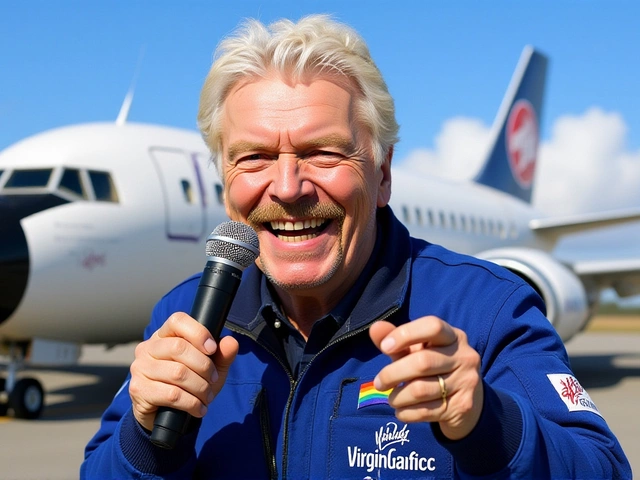
Richard Branson’s $2.8 Billion Fortune in 2025: Virgin Empire, Space Dreams, and a Legacy Beyond Wealth
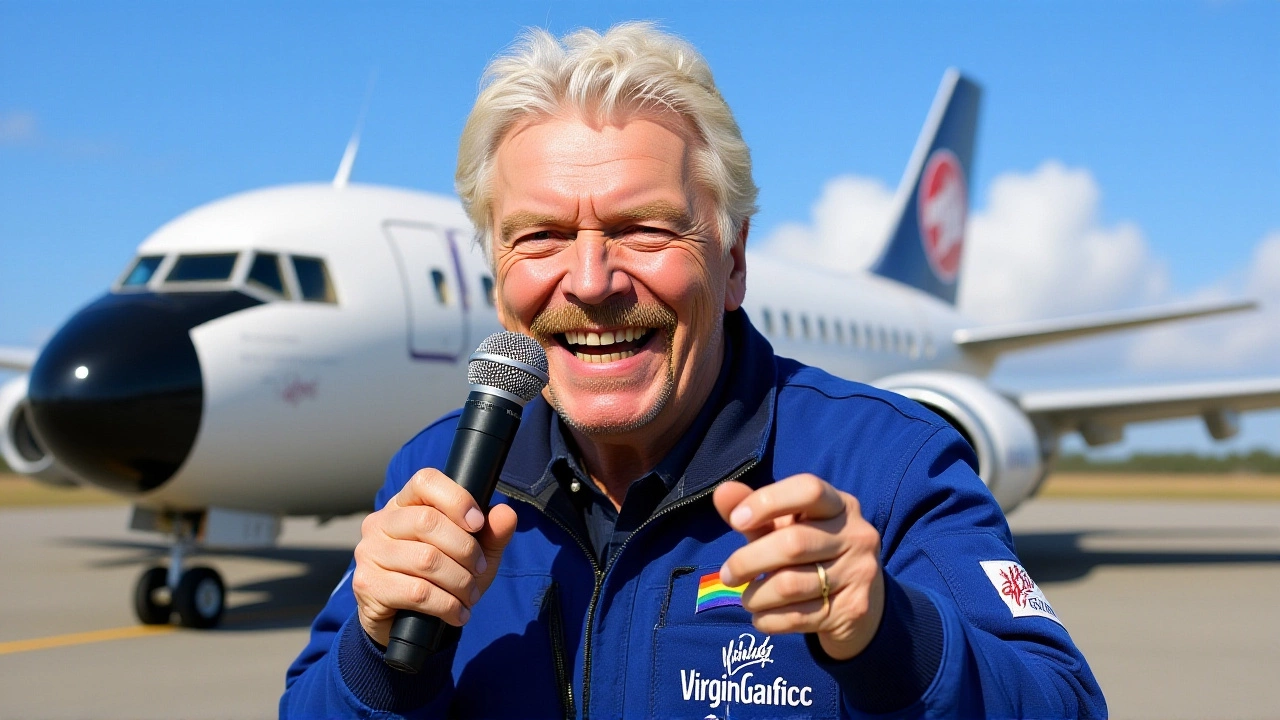
When Richard Branson floated his first record mail-order business from the crypt of a London church in 1970, no one could’ve predicted he’d one day rocket into space — or that his name would become synonymous with daring, disruption, and a billion-dollar brand empire. As of May 2025, his net worth stands at an estimated $2.8 billion, according to Forbes, though other sources like Finance Monthly and Fortune place it between $2.4 billion and $3.2 billion. What’s remarkable isn’t just the number — it’s how he built it. Not through sterile corporate maneuvers, but by betting on passion, personality, and the belief that business could be fun.
The Virgin Machine: From Records to Rockets
It started with a single shop on Bayswater Road, selling records by mail. By 1972, Virgin Records was a full-fledged label. But Branson didn’t stop there. He kept expanding — into airlines, then hotels, then mobile phones, then train tickets. Each venture carried the same DNA: a splashy launch, a rebellious edge, and a refusal to play by old rules. Today, Virgin Group Holdings Ltd, registered in the British Virgin Islands, oversees more than 40 companies. Virgin Atlantic and Virgin Galactic are the crown jewels — the former a major transatlantic carrier, the latter the space tourism pioneer Branson personally flew on in July 2021.The sale of Virgin Money UK to Nationwide Building Society in October 2024 was a financial watershed. Branson pocketed £724 million — £414 million from his 14.5% stake, and another £310 million for the right to keep using the Virgin name for six years. That single deal alone shaved nearly $1 billion off his paper wealth, dropping his Forbes estimate from $3 billion in June 2023 to its current $2.8 billion. But Branson doesn’t flinch at volatility. "Money’s a tool," he once said. "It’s not the goal. The goal is doing something that matters."
Necker Island: More Than a Playground
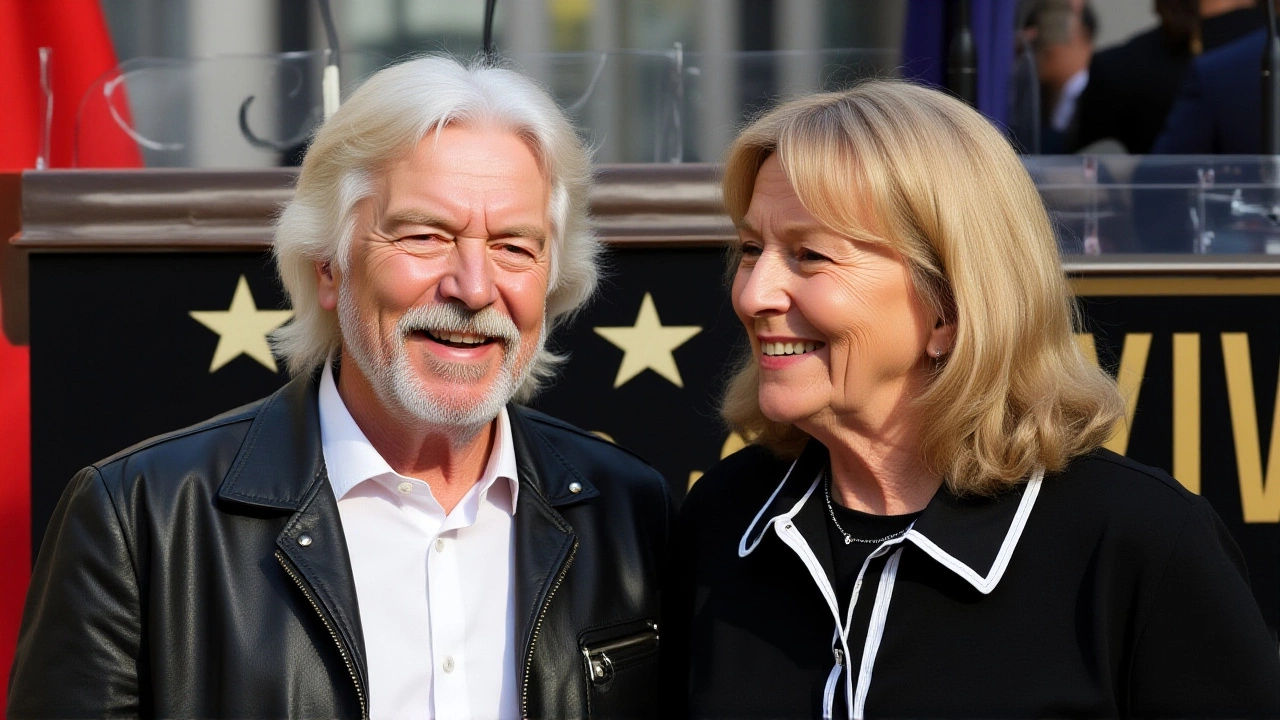
The 74-acre Necker Island in the British Virgin Islands is where Branson’s personal and professional worlds collide. He bought it in 1979 for $180,000 after a failed $100,000 bid the year before. Today, it’s a luxury retreat, a wedding venue — and the place where his children, Holly Branson and Sam Branson, both married. It’s also where he retreats for health reasons, countering critics who accuse him of using offshore structures for tax avoidance. "I live here because it’s good for my lungs," he told The Sunday Times. "Not because I’m trying to hide anything."His family life has been deeply personal. His wife, Joan Templeman, whom he married in 1974 and called his "rock" and "guiding light," passed away in 2024 at age 80 after 50 years together. In an emotional Instagram post, Branson wrote: "She was the most wonderful mum and grandmum our kids and grandkids could have ever wished for." Their shared commitment to philanthropy — signing the Giving Pledge — meant pledging the majority of their wealth to causes, not heirs. "Stuff really is not what brings happiness," they wrote in their pledge letter. "Family, friends, good health… that’s what matters."
Space, Rails, and the Next Frontier
Branson’s ambitions haven’t slowed. In 2025, Virgin Group announced plans to challenge Eurostar on the London-to-Paris-and-Brussels rail route by 2029. Yes, the man who took a plane to space now wants to take a train to Europe. It’s not madness — it’s strategy. He’s betting on sustainable travel, premium service, and his brand’s emotional pull. Meanwhile, Virgin Galactic continues to refine its commercial flights, with tickets now priced at $450,000 and a waiting list of over 800 people.His media presence remains strong. As a guest "Shark" on Shark Tank, Branson ranked as the second-richest investor on the show in 2025, behind only Mark Cuban. His appearances aren’t just for publicity — they’re an extension of his philosophy: backing bold ideas, even if they’re messy. "I’ve failed more times than I’ve succeeded," he told contestants. "That’s the price of innovation."
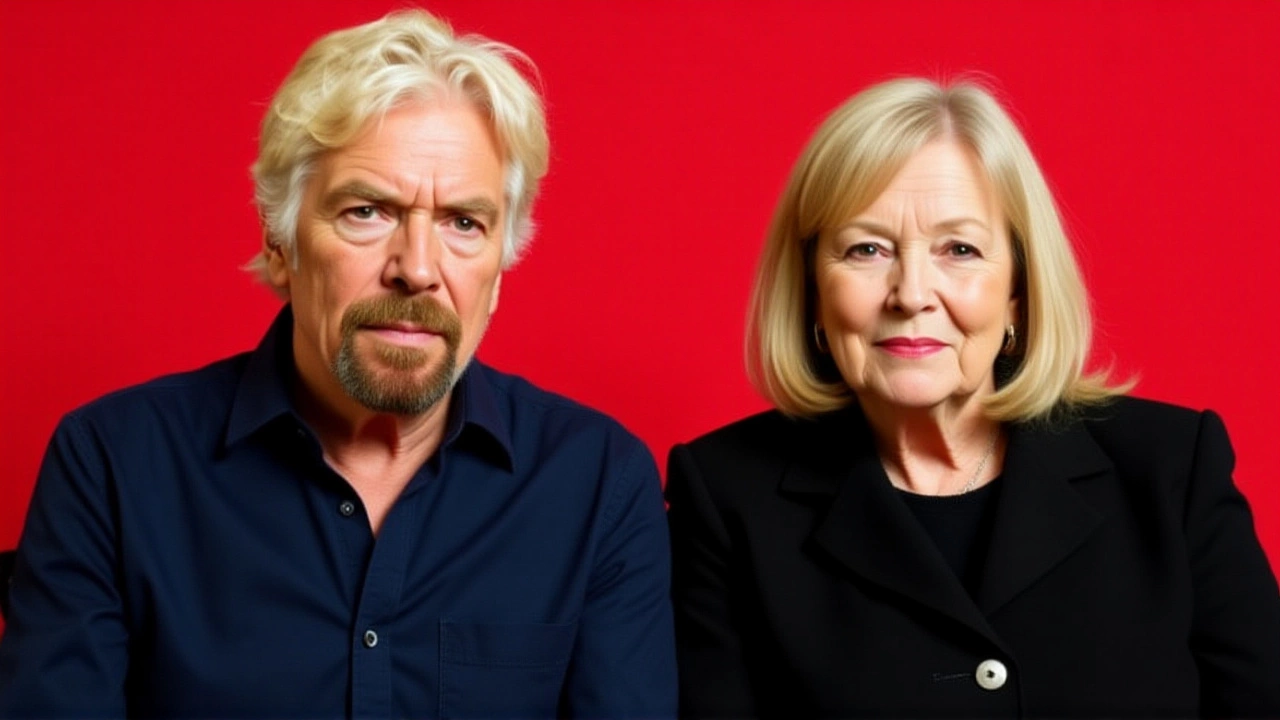
Why This Matters
Branson’s story isn’t just about money. It’s about how one man turned eccentricity into an economic force. He didn’t wait for permission. He didn’t follow the playbook. He built brands that feel human — because he was human in them. His wealth fluctuates, his ventures stumble, and his critics call him a showman. But when you look at the legacy — the jobs created, the space tourism industry he launched, the charities funded, the island that hosts weddings and dreams — you realize: Richard Branson didn’t just make money. He made possibility.Frequently Asked Questions
How did Richard Branson’s net worth drop from $3 billion to $2.8 billion?
The drop came after Branson sold his stake in Virgin Money UK to Nationwide Building Society in October 2024. He received £724 million ($920 million USD), but the transaction reduced his equity holdings and shifted his asset structure. While the cash influx was massive, Forbes recalculated his net worth based on remaining equity in Virgin Group companies, which had seen slower growth post-pandemic, leading to the revised $2.8 billion estimate.
What role does Virgin Galactic play in Branson’s current wealth?
Virgin Galactic remains a long-term bet rather than a current profit engine. Though it went public in 2019 and has flown paying customers since 2023, it’s still operating at a loss. Branson’s wealth tied to it comes from his 21% ownership stake — worth an estimated $300–$400 million as of 2025 — and future royalty potential from licensing its brand and technology. The real value lies in its symbolic power: it keeps Virgin at the forefront of innovation, attracting customers across other ventures.
Why is Virgin Group structured through offshore companies?
The use of entities like Virgin Group Holdings Ltd in the British Virgin Islands is standard for global conglomerates managing intellectual property, licensing, and international investments. Branson has stated his structure is for operational efficiency, not tax evasion. He and Joan Templeman publicly committed to the Giving Pledge, donating the majority of their wealth to charity — a move that contradicts the stereotype of offshore secrecy.
What’s next for Virgin Group in 2025 and beyond?
The most concrete next step is Virgin’s planned entry into the European rail market by 2029, targeting the high-speed London-Paris-Brussels corridor. The company is reportedly in talks with infrastructure providers and governments to secure track access. Meanwhile, Virgin Hotels is expanding in Asia, Virgin Voyages is adding new cruise ships, and Virgin Galactic is developing a next-gen spacecraft. Branson’s team is also exploring sustainable aviation fuels and electric regional aircraft — signaling a pivot toward green tech.
How does Branson’s wealth compare to other billionaire entrepreneurs?
At $2.8 billion, Branson ranks below tech titans like Elon Musk or Jeff Bezos, but he’s among the top 10 wealthiest self-made entrepreneurs in the UK. What sets him apart is his diversity: unlike most billionaires tied to one industry, Branson’s fortune spans aviation, space, hospitality, finance, and media. His net worth is also more liquid — heavily tied to private equity stakes rather than public stocks — making it harder to track but more resilient to market swings.
Did Joan Templeman have a role in Branson’s business success?
Absolutely. Branson has repeatedly credited Joan as his strategic sounding board and emotional anchor. She helped him draft early Virgin marketing materials and was deeply involved in philanthropy. Her death in 2024 marked a profound personal shift. Friends say he’s since become more reflective, focusing on legacy over expansion. Her influence lives on in Virgin’s emphasis on customer care and ethical branding — values she championed behind the scenes.